California Bicycle Dooring Accidents: Who May Be Liable?
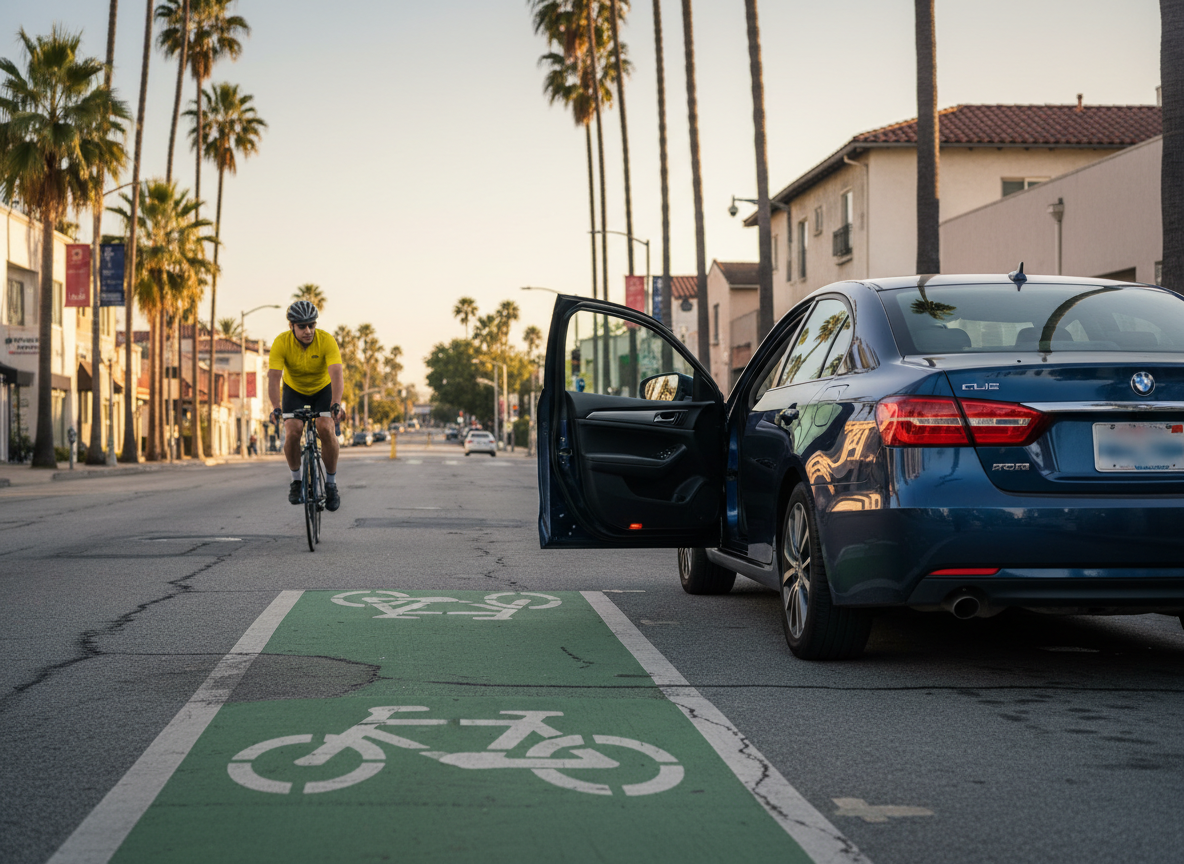
A cyclist can be seriously injured when a driver or passenger opens a vehicle door into the cyclist’s path. These incidents are often called “dooring” accidents.
California law addresses unsafe door opening
Vehicle Code section 22517 prohibits opening a vehicle door on the side available to moving traffic unless it is reasonably safe and can be done without interfering with traffic. It also restricts leaving that door open longer than necessary to load or unload passengers.
Bicyclists generally have roadway rights and duties
Under Vehicle Code section 21200, a person riding a bicycle on a highway generally has the rights and is subject to the provisions applicable to a vehicle driver, except rules that by their nature do not apply.
Who may be responsible?
Depending on the facts, responsibility may involve the person who opened the door, the driver or vehicle owner under an applicable legal theory, or another party whose conduct contributed to the incident. Liability should be evaluated from the actual evidence rather than assumed from vehicle ownership alone.
Preserve the physical evidence
Photograph the open-door area, bicycle lane or roadway, vehicle position, bicycle damage, door damage, debris, and any visible injuries. Preserve the bicycle, helmet, damaged clothing, and original image files.
Look for surveillance and witnesses
Nearby businesses, residences, parking structures, buses, and other vehicles may have video. Obtain witness contact information and identify cameras promptly because recordings can be overwritten.
Comparative fault may still be raised
An insurer may argue that the cyclist’s speed, lane position, visibility, or other conduct contributed to the incident. California comparative-fault principles allow responsibility to be allocated based on the evidence.
Glendale Law Group represents injured cyclists throughout Southern California. Call (818) 745-0101 for a free consultation.
This article provides general information only and is not legal advice. Reading it does not create an attorney-client relationship. Deadlines and rights depend on the facts, applicable law, and insurance policy language.